Ares

Thrust vector controlled rocket. Closed-loop stabilization on unstable flight hardware.

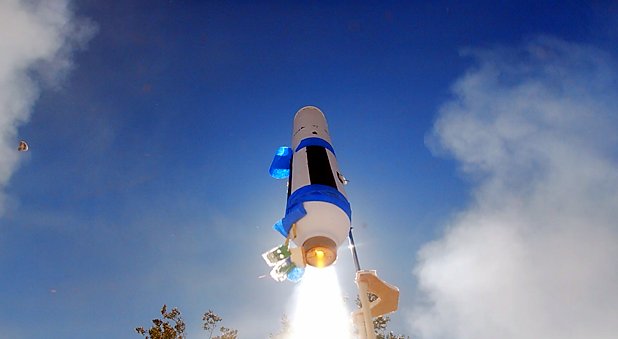
Ares climbing on its motor flame against a blue sky

Ares is an actively stabilized model rocket, built as a stepping stone to more advanced rocketry. Instead of relying on fins, it steers its own motor: a thrust vector control mount uses two 9-gram servos to swing an F15 motor ±5° on two axes, fighting wind and holding the rocket vertical even at low speed. A proportional-derivative controller, pre-tuned in simulation, decides where to point it. A custom Arduino Nano board drives the mount, fires the parachute and logs flight data, and the whole internal assembly is 3D-printed and modular, so it does not depend on the cardboard body tube for strength.

Category: Controls / Embedded Systems / Aerospace

Timeline: February 2022 - March 2024

Status: Completed across three launches

My role: Led the mechanical CAD, including every TVC mount from the first prototype to the A5 ‘Compact’, and led the PD control algorithm, tuned in MATLAB Simulink. Co-wrote the flight software with Miles and contributed to some of the circuit board iterations.

Results: Three launches in the Anza-Borrego desert. On the third, in wind strong enough that the pad went behind a bush, active stabilization kept the rocket upright for the whole burn.

A collaboration

The team

Braxton Herold

Mechanical CAD and the control algorithm.

Miles Krawitz

Electronics: led the circuit boards, and co-wrote the flight software.

Matthew Iannitelli

CAD, including the first TVC mount we static-tested.

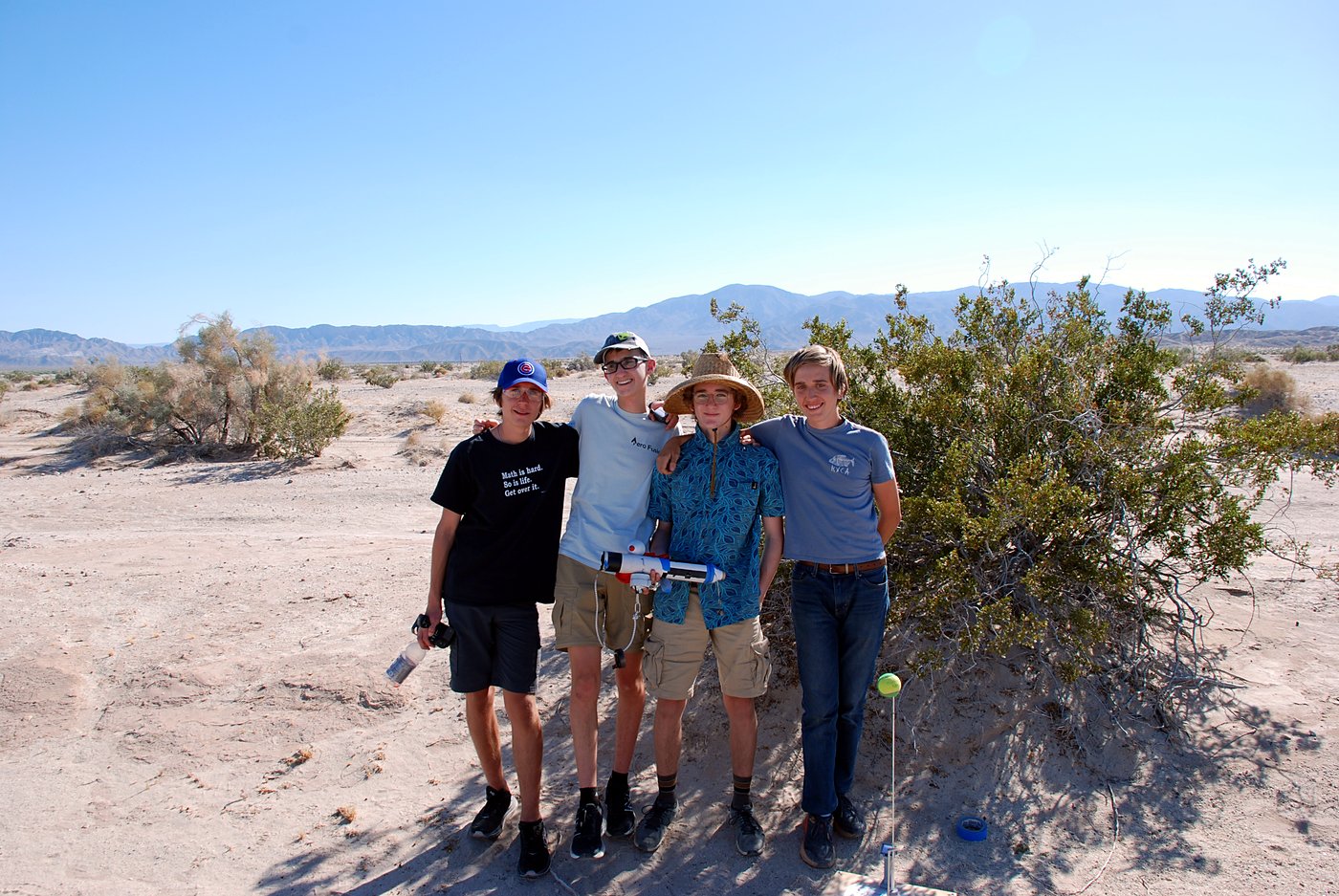
We started in 2022 and had our first successful launch in 2024. Cinematic launch photos by Arman Kasnavi.

The thrust vector control mount

The TVC (latest version, the A5 ‘Compact’) controls the rocket’s thrust vector in the x and y axes with two servo motors. Despite being 3D-printed, it is surprisingly effective at bearing the thrust load and smoothly vectoring the motor.

Learn more
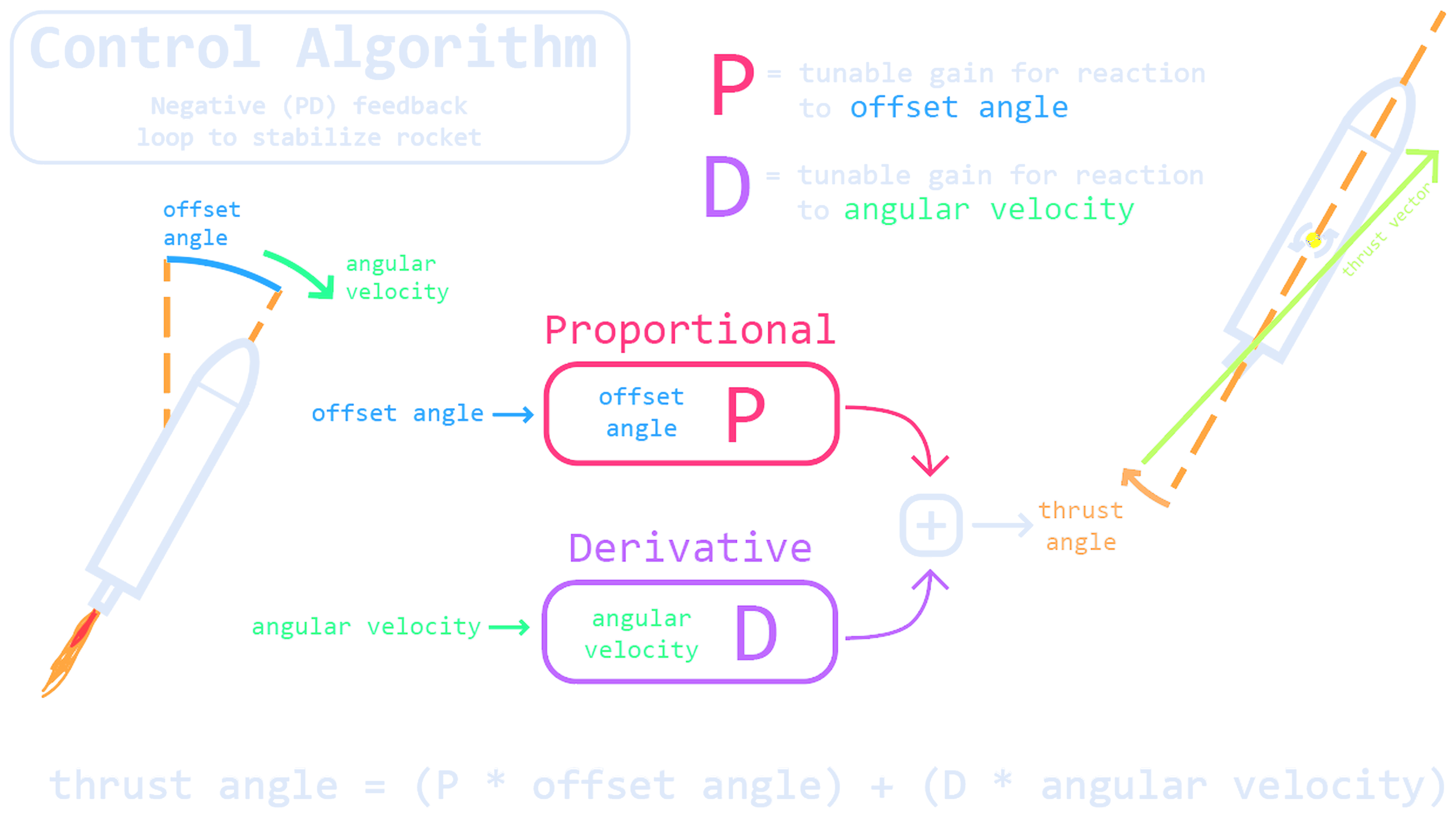
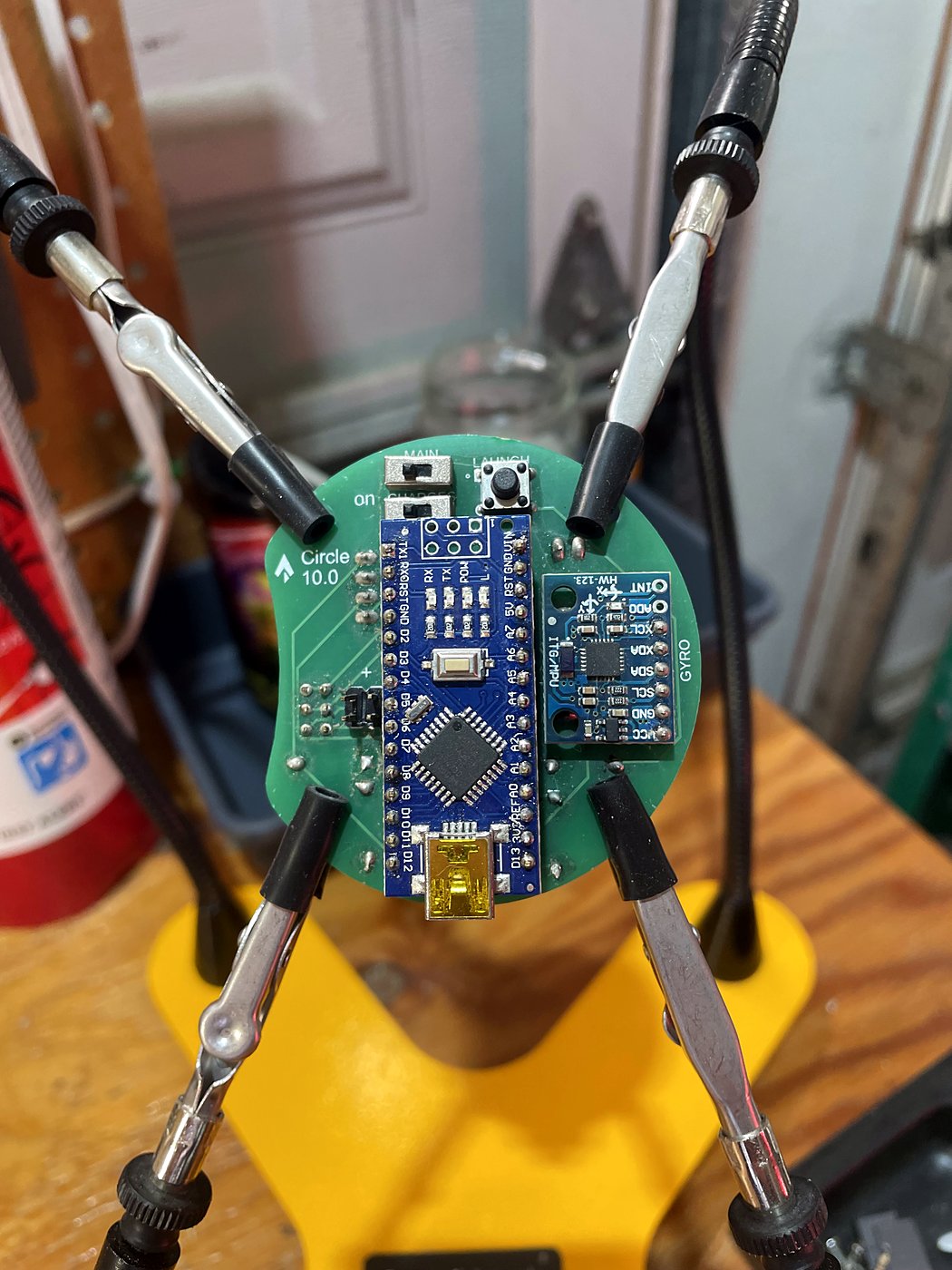
Diagram of the PD control loop

The algorithm

Ares runs on a proportional-derivative (PD) algorithm, a good balance between simplicity and functionality. It aims to minimize the distance to the setpoint while also minimizing the speed at which it approaches it.

We simulated the algorithm in MATLAB Simulink to tune the P and D gains.

Learn more
An Ares flight computer board held in helping hands

The flight computer

The Circle 10.0 flight computer controls all the on-board electronics. It runs on an Arduino Nano that takes sensor input from a gyro/accelerometer (MPU-6050) and a barometer (BMP-180).

The PCB can control two servos and two pyro charges, and logs data to a micro SD-card module.

Learn more
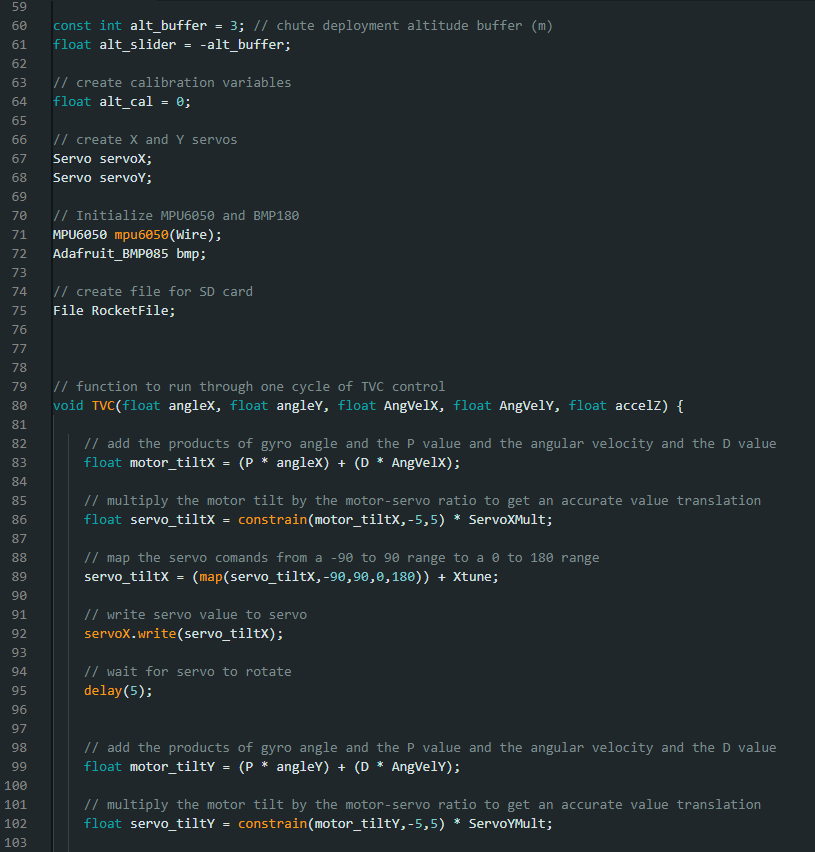
A slice of the Ares flight code

The code

The code controls what the flight computer does. Its main job is to apply the control algorithm to the TVC mount so the rocket can actively stabilize.

It also does all the other flight tasks, like ejecting the parachute at apogee (or in an emergency) and logging flight data.

Learn more
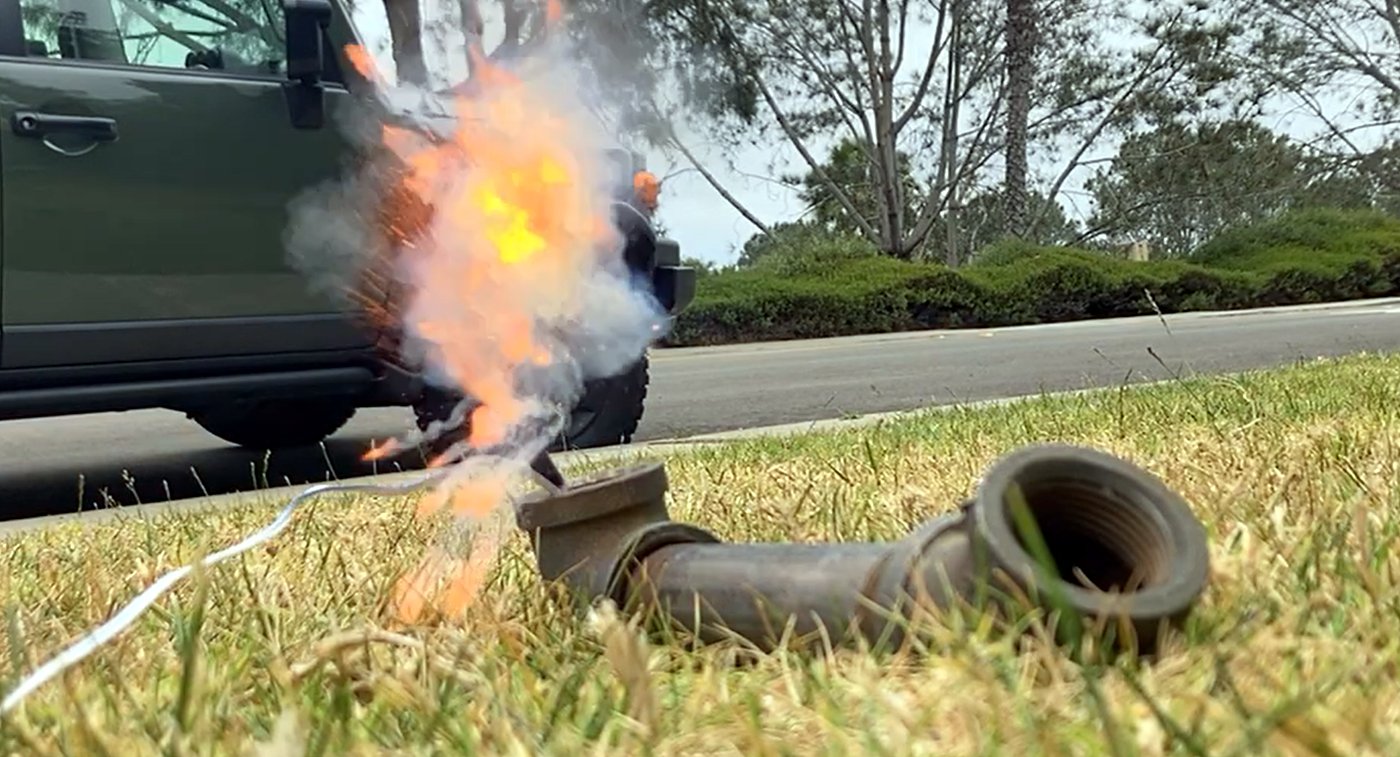
A black powder ejection test

The parachute ejection system

The parachute ejection system has to reliably deploy the parachute while being as small and lightweight as possible. We went through three main types: motor delay charge ejection, micro rocket motor ejection, and black powder.

Learn more
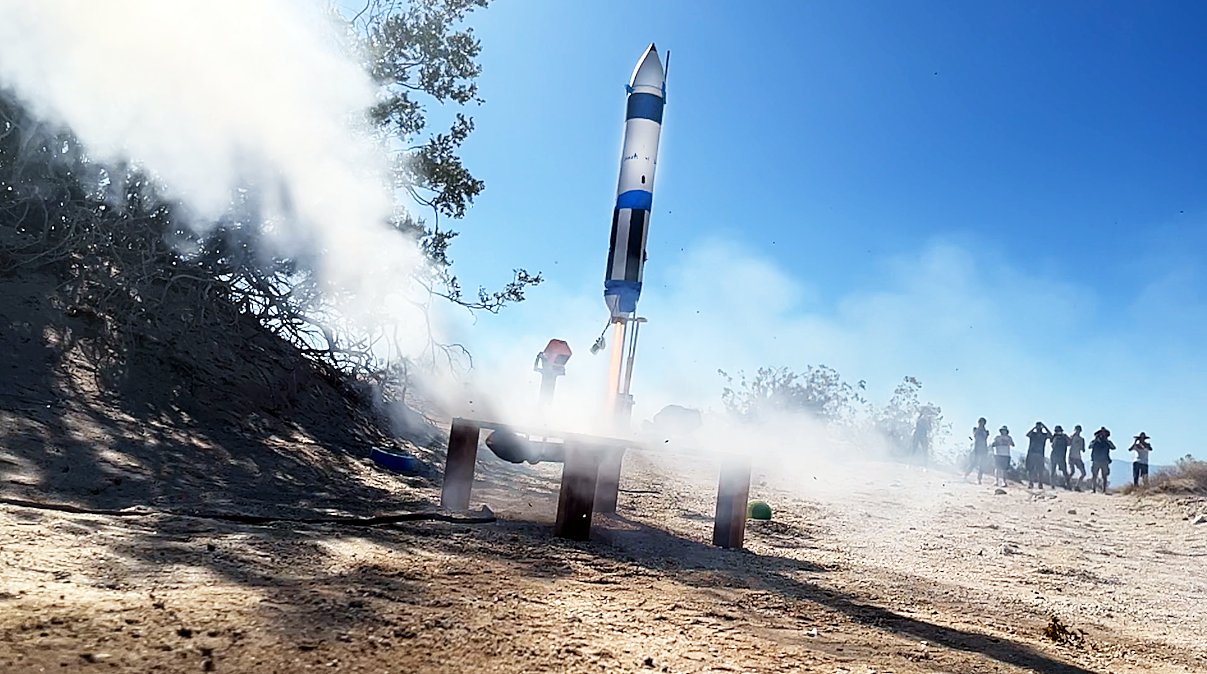
Ares lifting off from the pad

Launches

Three launches in the Anza-Borrego desert: 30 mph wind and a late parachute, an aerodynamically unstable second flight, and a third that held vertical in high wind.

Learn more