01
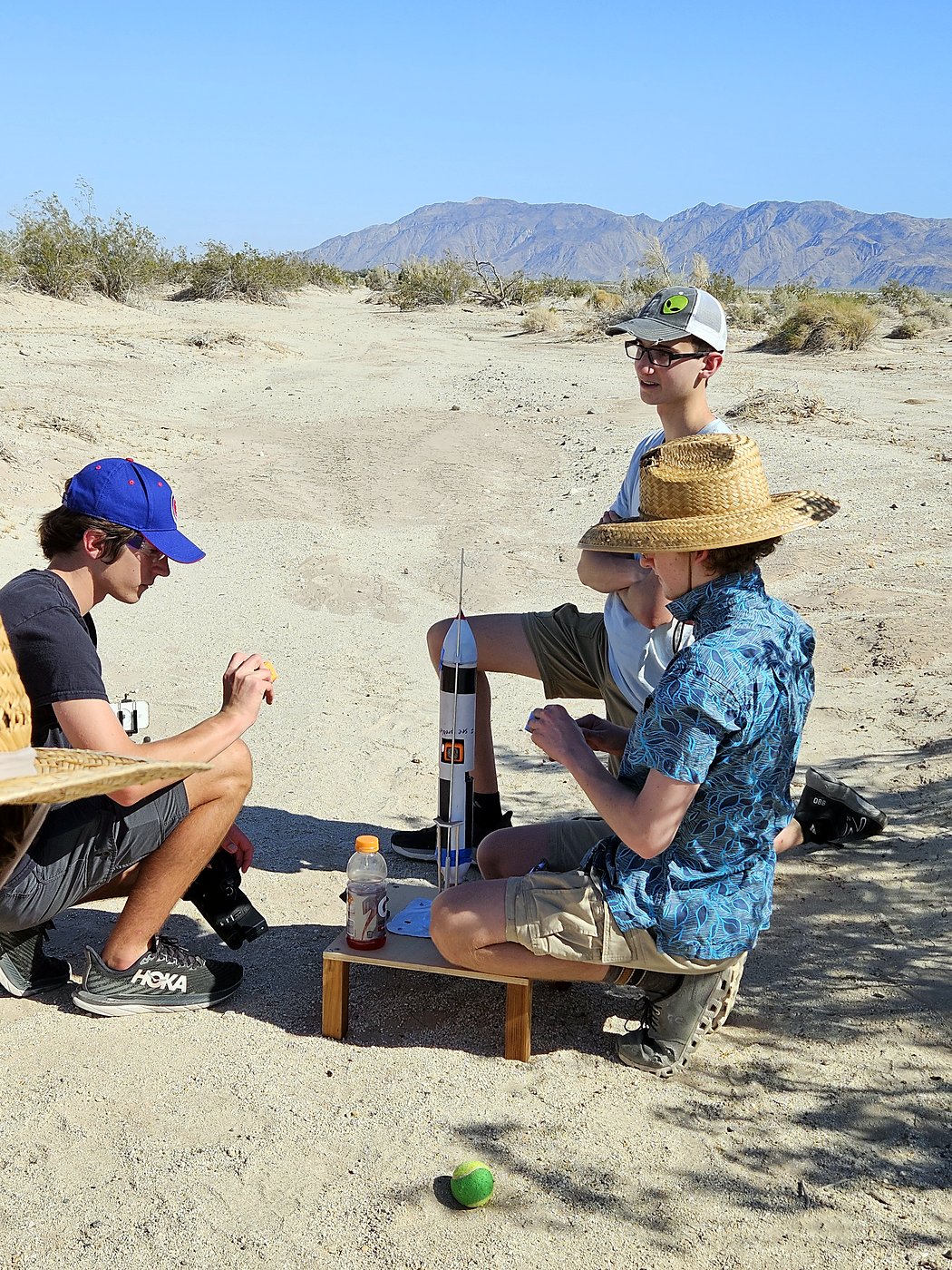
Pad idle
In this phase, the rocket is waiting on the launchpad for the launch button to be pressed. This is a great phase for taking pictures and getting hyped up for the launch.
Ares — Led by Miles Krawitz and Braxton Herold
Software tells the circuit board what to do and how to react to inputs. The code’s main job is to apply the control algorithm to the TVC mount so the rocket can actively stabilize. Each cycle it multiplies the tilt angle by P and the angular velocity by D, adds them, clamps the result to ±5°, and maps it onto the servo range.
It also handles every other flight task: ejecting the parachute at apogee or in an emergency, and logging flight data to the SD card. It runs the rocket through four stages.
01
In this phase, the rocket is waiting on the launchpad for the launch button to be pressed. This is a great phase for taking pictures and getting hyped up for the launch.

02
This phase starts after clicking the launch button five times in quick succession. It initiates a 30-second countdown sequence, beeped out on the onboard buzzer.
03
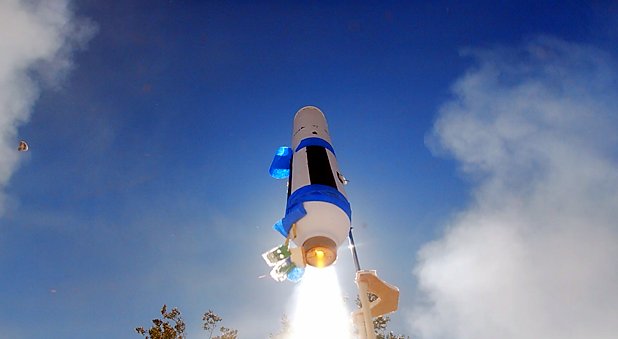
The controlled flight stage is kicked off by lighting the motor and beginning thrust vector control. As the rocket ascends, its deviations are compensated for by the torque from the vectoring motor.
The whole time, the computer is also checking whether the rocket has tilted more than ±45°, in which case it aborts the flight and emergency-ejects the parachute.
04
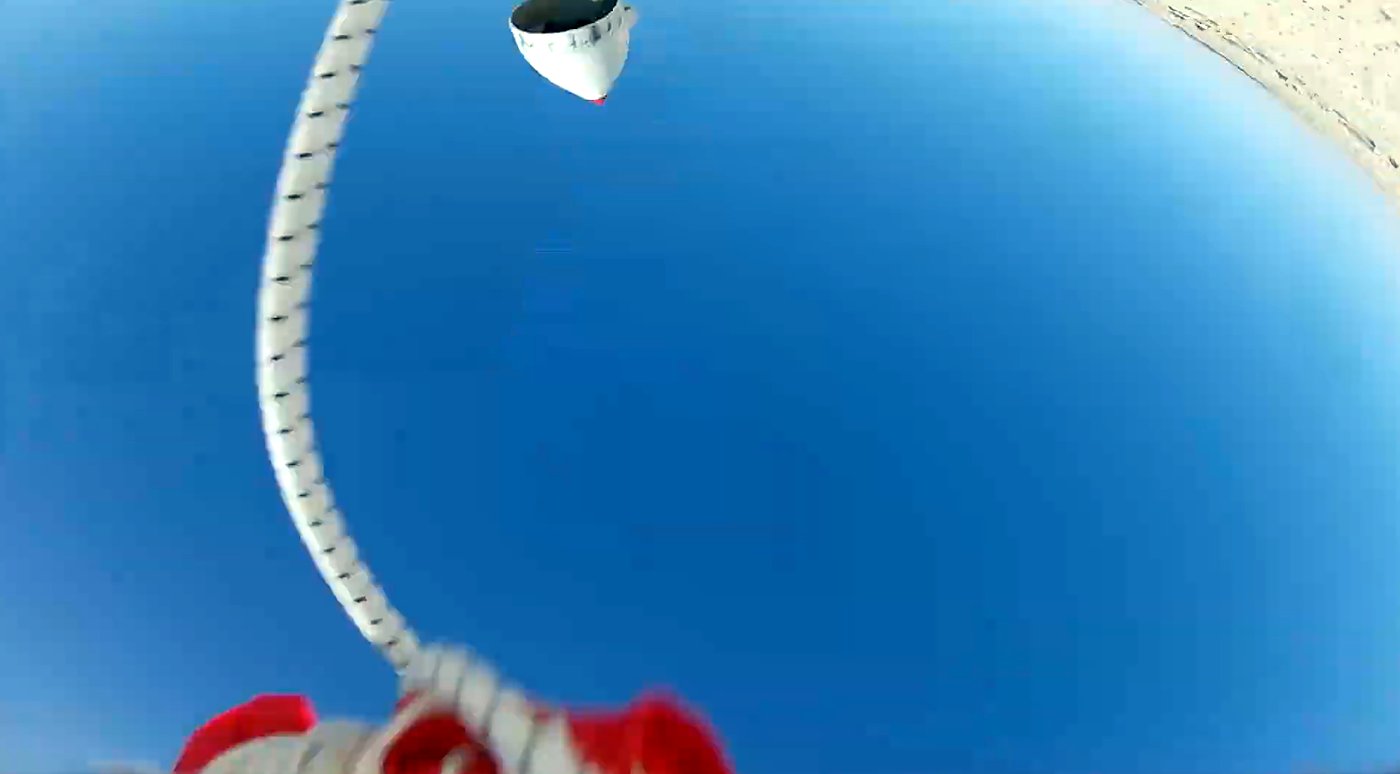
Once the rocket starts coming back down, or if an emergency is detected, the parachute is deployed and the rocket coasts down to the ground.