Ares — Recovery
Parachute Ejection
The system has to deploy the parachute reliably while staying as small and light as possible. We went through three approaches.
Ares — Recovery
The system has to deploy the parachute reliably while staying as small and light as possible. We went through three approaches.
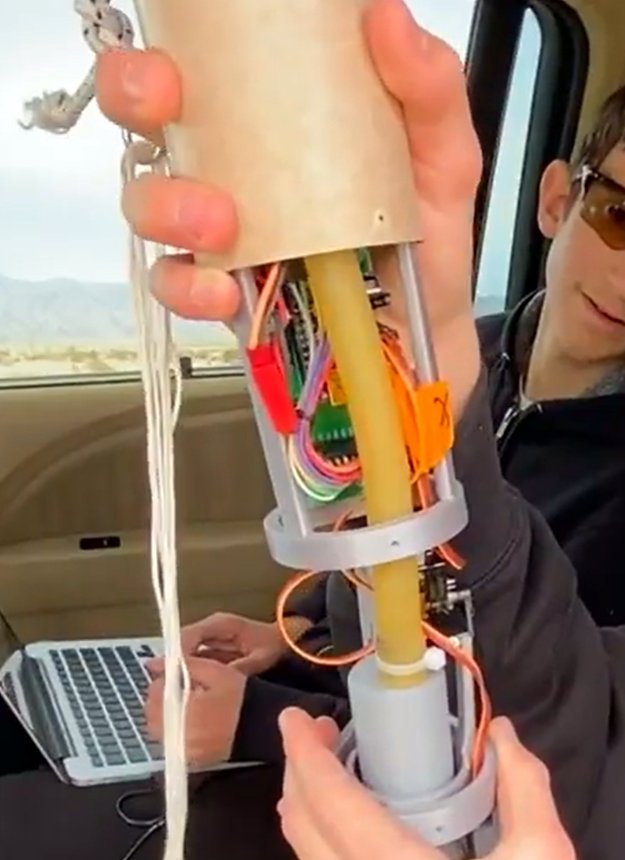
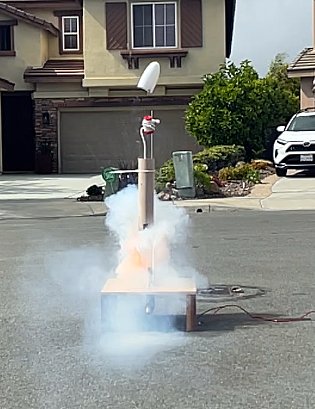
01 · Launch 1
Normal model rockets deploy their parachute with a black powder charge in the back of the motor, after a timed delay. We realized we could use it if we piped the pressure to the parachute piston through a long rubber tube.
It was a passive system, and its long delay is why launch 1’s parachute came out too late.
02 · Launches 2 and 3
This idea started as a joke, but necessity is the mother of invention. After the first launch we knew we had to control when the parachute came out. The obvious answer was a small black powder charge, but we were too scared to make them.
Instead, we pointed the smallest rocket motor we could buy at a piston that pushed the parachute out. It worked pretty well, and flew on our second and third launches.
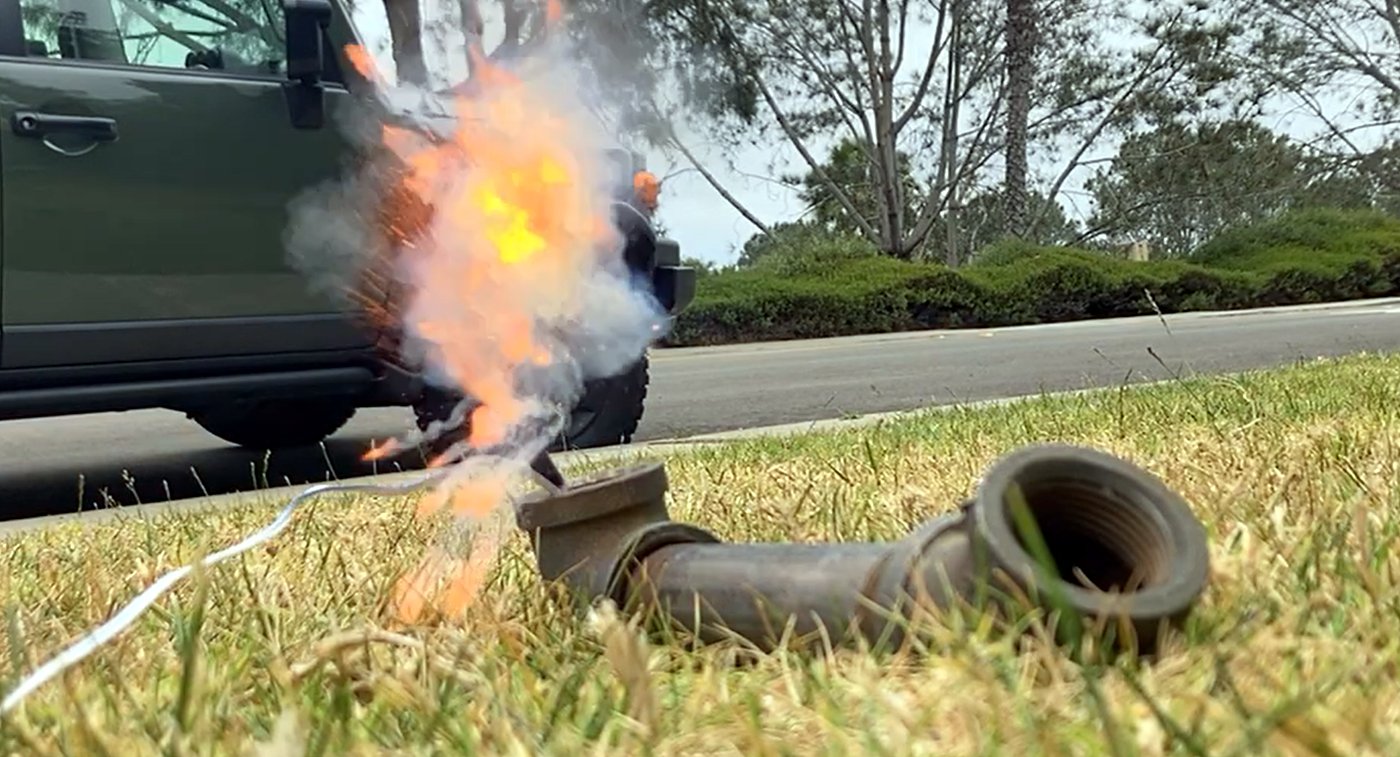
03 · After Ares
After the successful third launch we tried black powder ejection, because it would be lighter. A little more dangerous, but it worked the best of the three.
It came too late for use on Ares though.