Case Studies
Full systems, not isolated code. Design, simulation, firmware, and field testing.
TVC Rocket
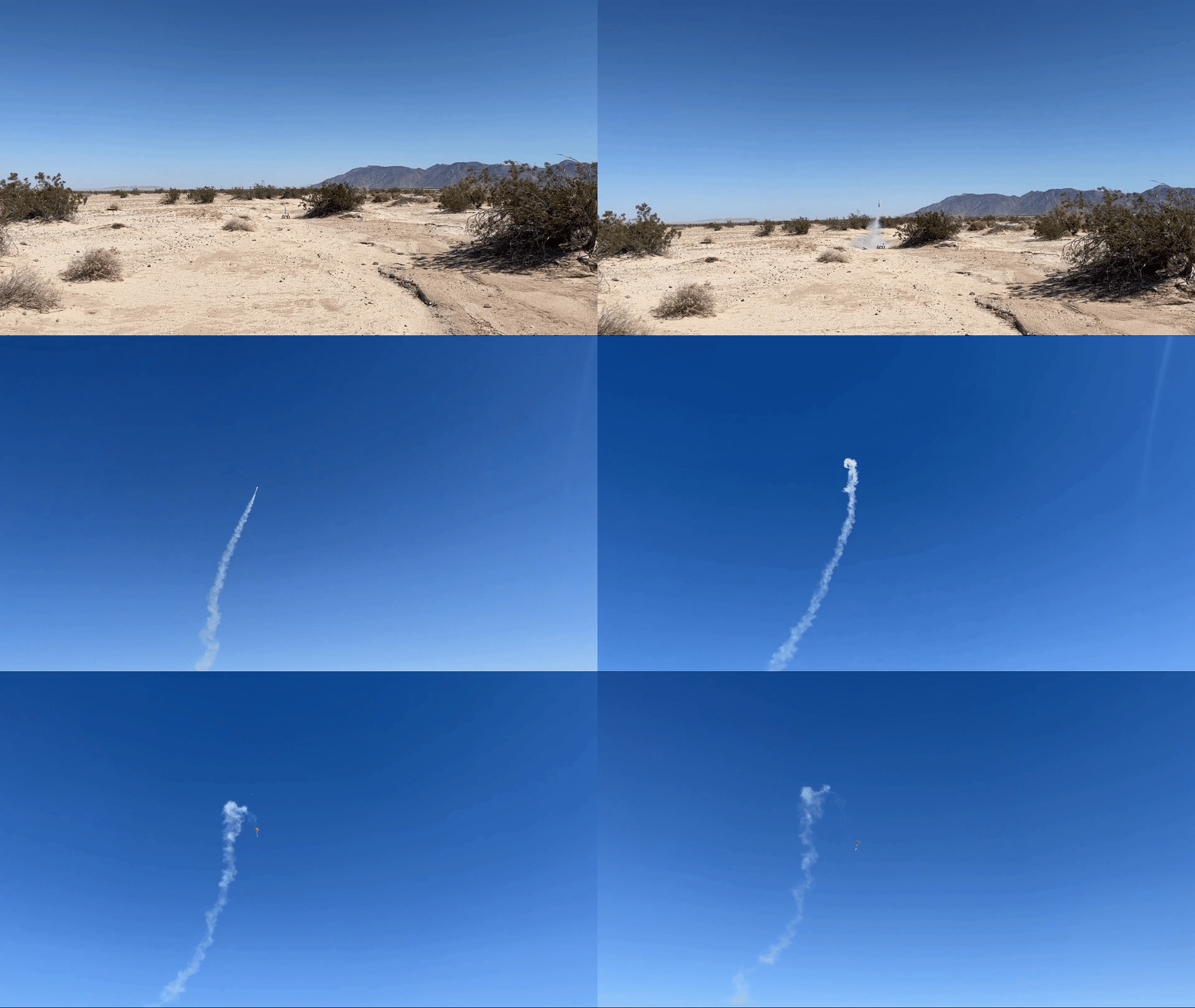
A thrust-vector-controlled rocket is unstable by default. The goal was to maintain controllability across transitions like burnout while handling real sensor noise and actuator limits.
Problem: Regime transitions and disturbances caused instability and oscillation.
Contribution: I designed and tuned a PD/LQR-oriented controller, implemented real-time firmware, and integrated sensing plus actuation into a single flight stack.
Outcome: Stable controlled flight under test conditions with measurable reduction in angle error and oscillation.
Metrics to publish: Max angle deviation, settling time, and simulation-vs-flight error.
Flight Simulator Cockpit (Multi-Axis Motion)
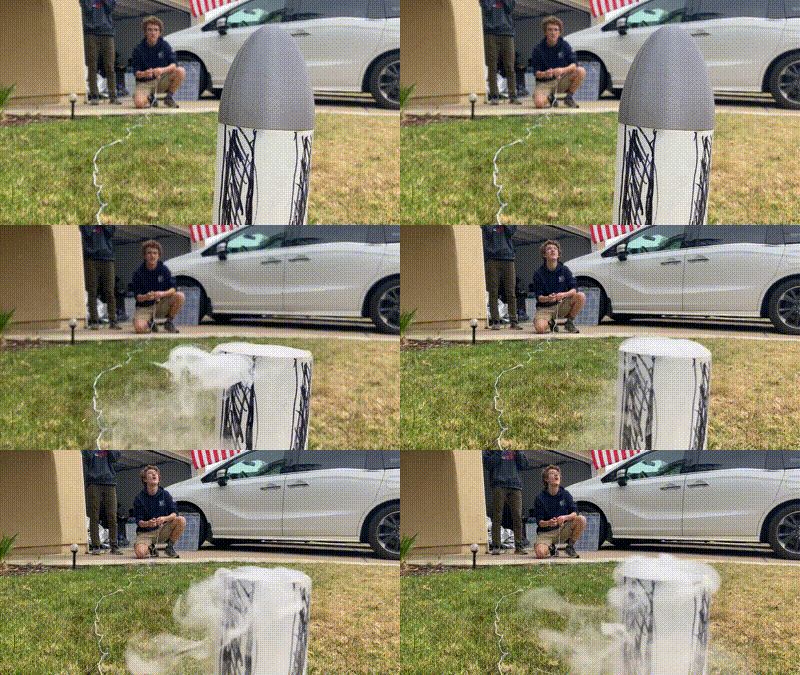
Built a motion-capable cockpit system that maps simulation output to physical movement with deterministic timing.
Problem: Motion quality degrades quickly under latency and mis-tuned control.
Contribution: I architected the control path from simulation signal ingest to actuator commands and tuned response behavior for stability and realism.
Outcome: Improved response consistency and reduced drift/jitter under repeated runs.
Metrics to publish: End-to-end latency, tracking error, and repeatability variance.
Payload Drop Assist / Targeting System
_JPG.jpg)
Developed a targeting assist workflow for precision payload release, with emphasis on controllable error and practical deployment.
Problem: Environmental variability made manual targeting inconsistent.
Contribution: I built the estimate-and-release pipeline and refined it with iterative field data.
Outcome: Higher drop consistency and tighter error bounds compared to baseline manual operation.
Metrics to publish: Mean drop error radius and error reduction versus baseline.
Embedded Sensor Fusion System

Built an embedded estimation layer combining IMU and barometric data for cleaner state feedback in noisy conditions.
Problem: Raw sensors produced noisy and drifting state estimates.
Contribution: I designed and tested filtering/fusion logic tuned to realistic motion and vibration profiles.
Outcome: More stable attitude/altitude estimates for downstream control loops.
Metrics to publish: RMS error, drift rate, and estimate variance before vs after fusion.
FTC Robotics (In Development)
Competition robotics work focused on control reliability and integrated subsystem behavior under match constraints.